
As I was walking around a local hamfest in the fall of 2014, I spotted a KWM-2 for sale. I'm not quite sure why, but I decided to look it over. Mind you, I had just finished up my 75S-1 and was finishing up my 32S-1. I made the seller what I felt wqas a reasonable offer, but was turned down. I went on and stopped to talked to a friend of mine a little ways down the path. About 5 minutes later, the seller waled over and made a counter offer which I accepted.
I was now the proud owner of a Collins KWM-2. In addition, the seller had the original manual (in poor condition) as well as all the service bulletins issued by Collins for the KWM-2. All in all, I was pleased.

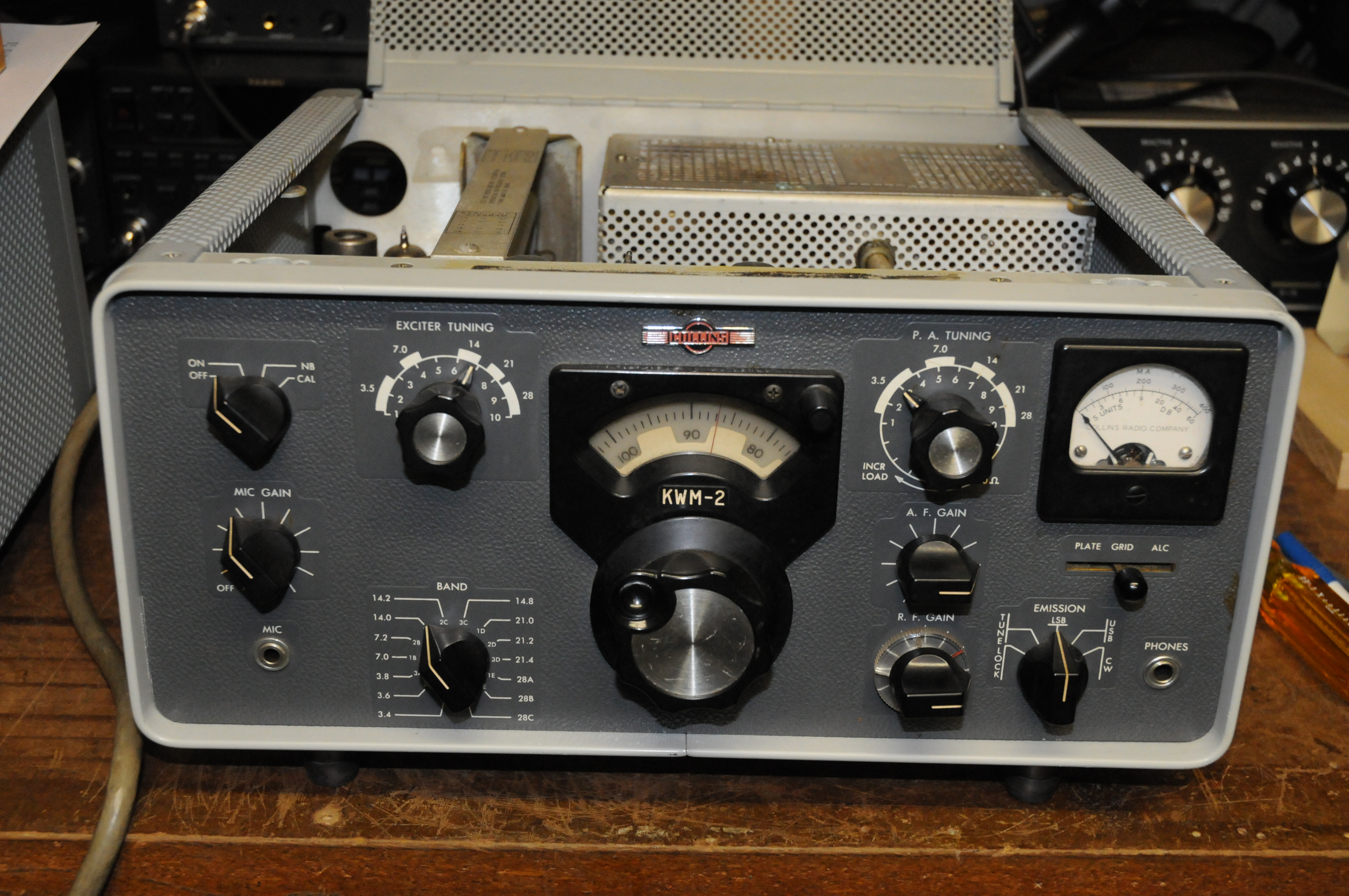
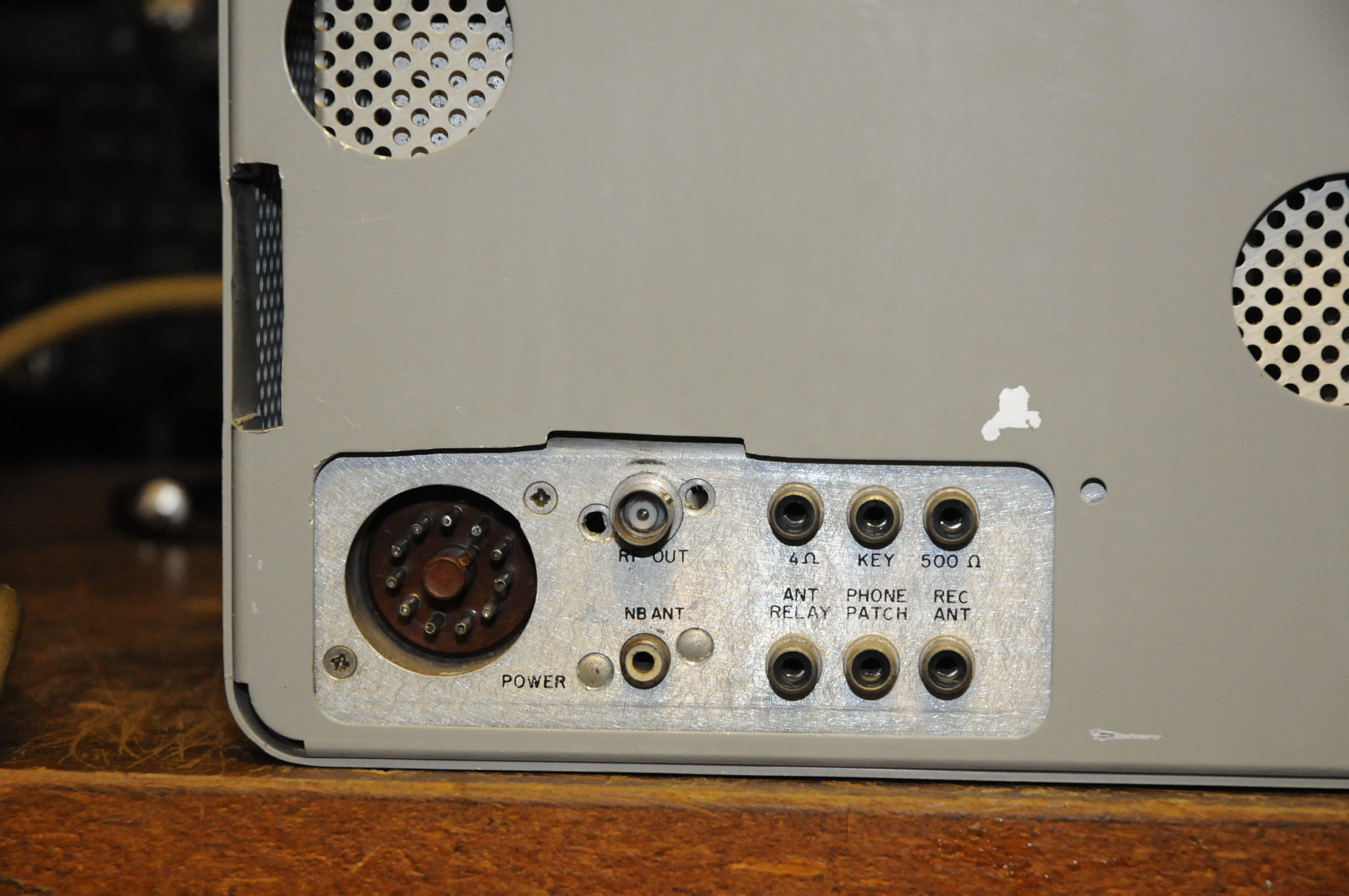
Externally, a couple of things jumped out at me. The first was a modification where the RCA antenna jack had been replaced by a BNC connector.
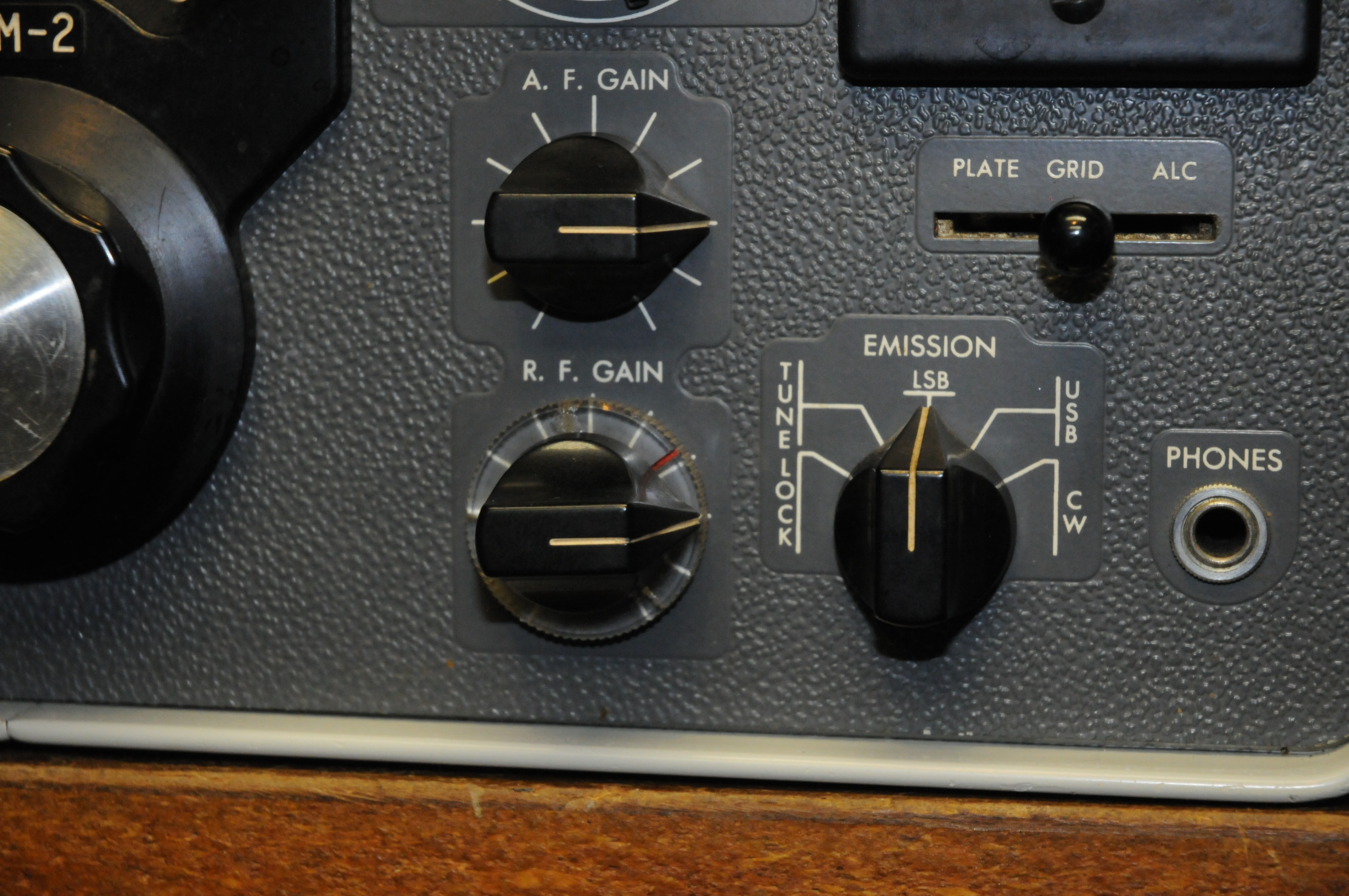
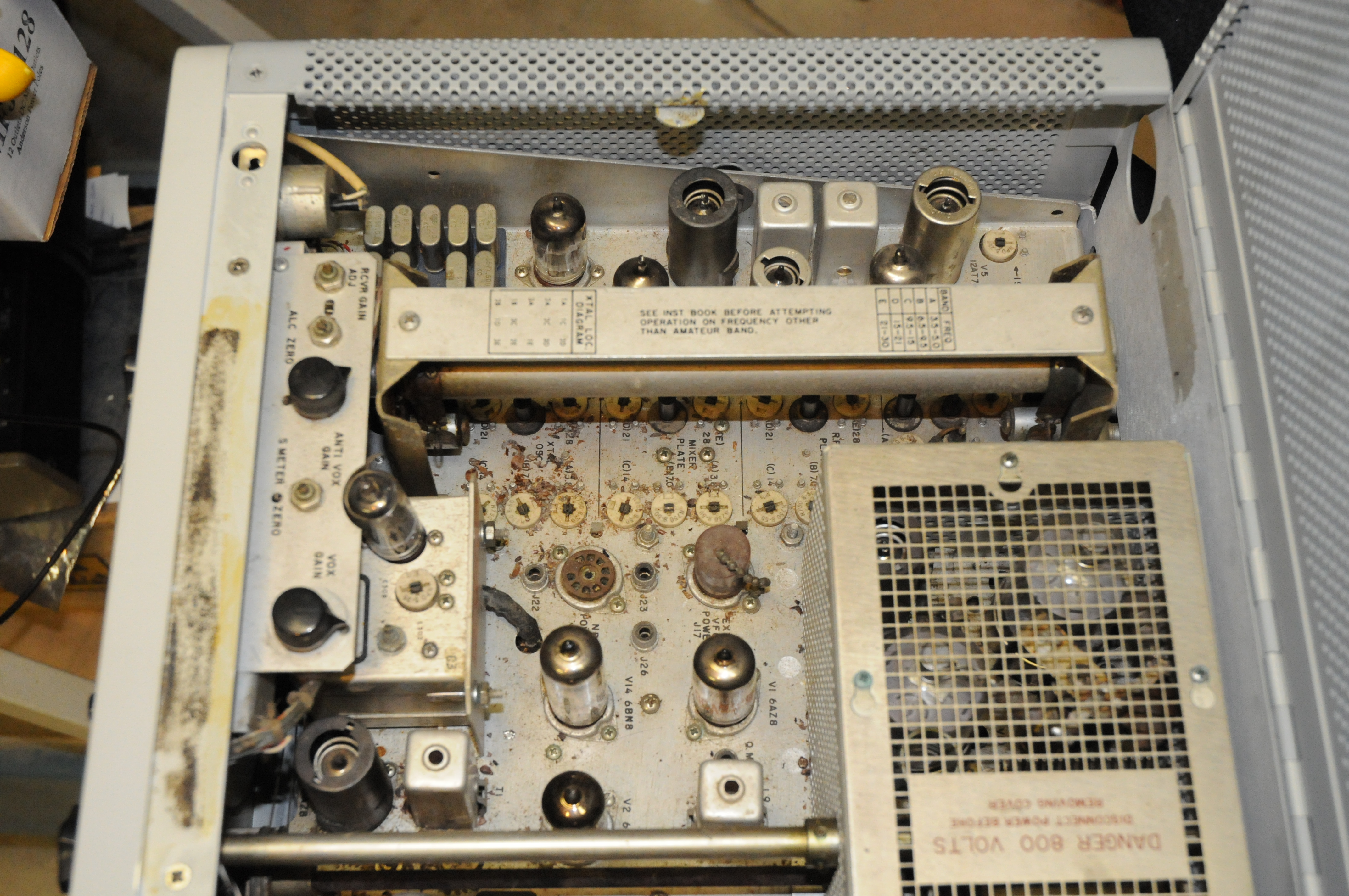
Internally, it was loaded with debris. While none of the wires were chewed, it looked like the kind of debris from something living inside the cabinet. However, there were no "droppings" inside, so I think the debris may have mostly falled into the cabinet through all the ventilation holes in the cabinet.
Here is a picure of some of the debris I found on the inside:

After spending a number of hours with cleaning solution, water, and cotton-tipped swabs, I got the majority of the chassis cleaned up. However the transmitting variable capacitors needed a very thorough cleaning; more than I could do with them attacted to the chassis. Here is a picture of the PA area with the variable capacitors removed. You can see how dirty the chassis really was.
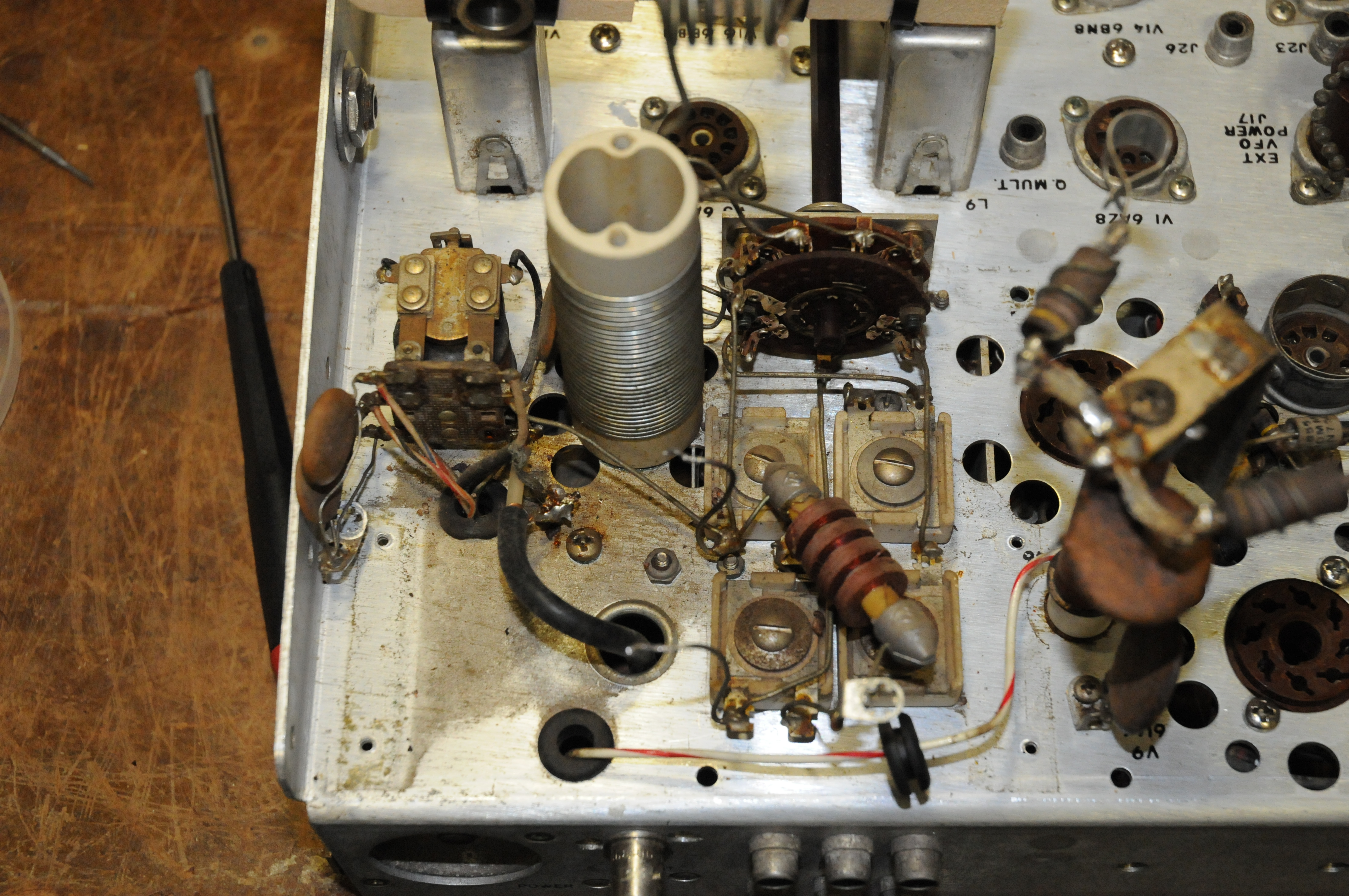
How I removed the variable capacitors is an interesting story. It took me a while to come up with a way to remove them without having to worry about restringing the dial cord. First, I took an ordinary paint stirrer and marked it up with some curring lines.
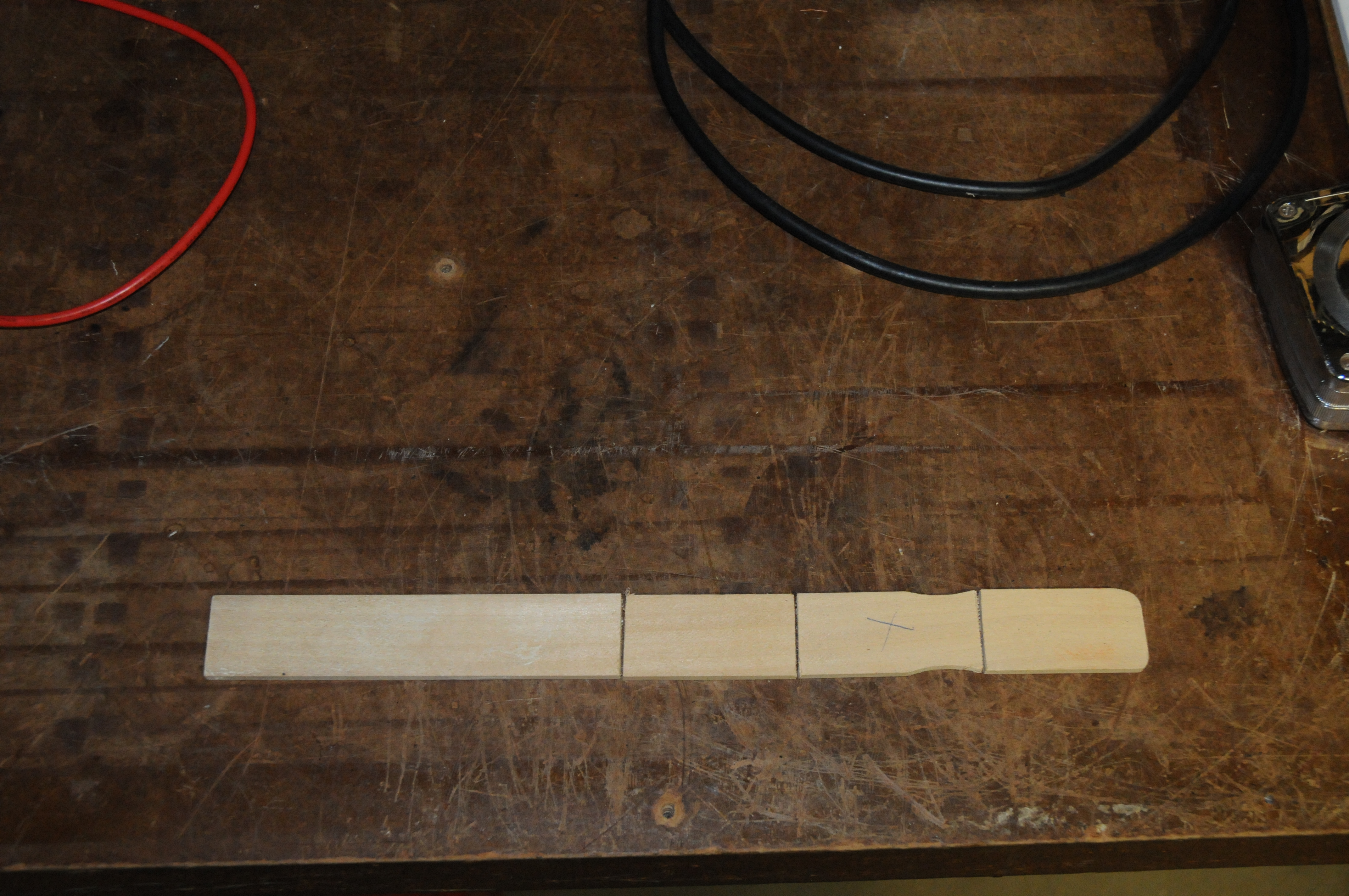
After making some cuts, I was left with three pieces of thin wood.
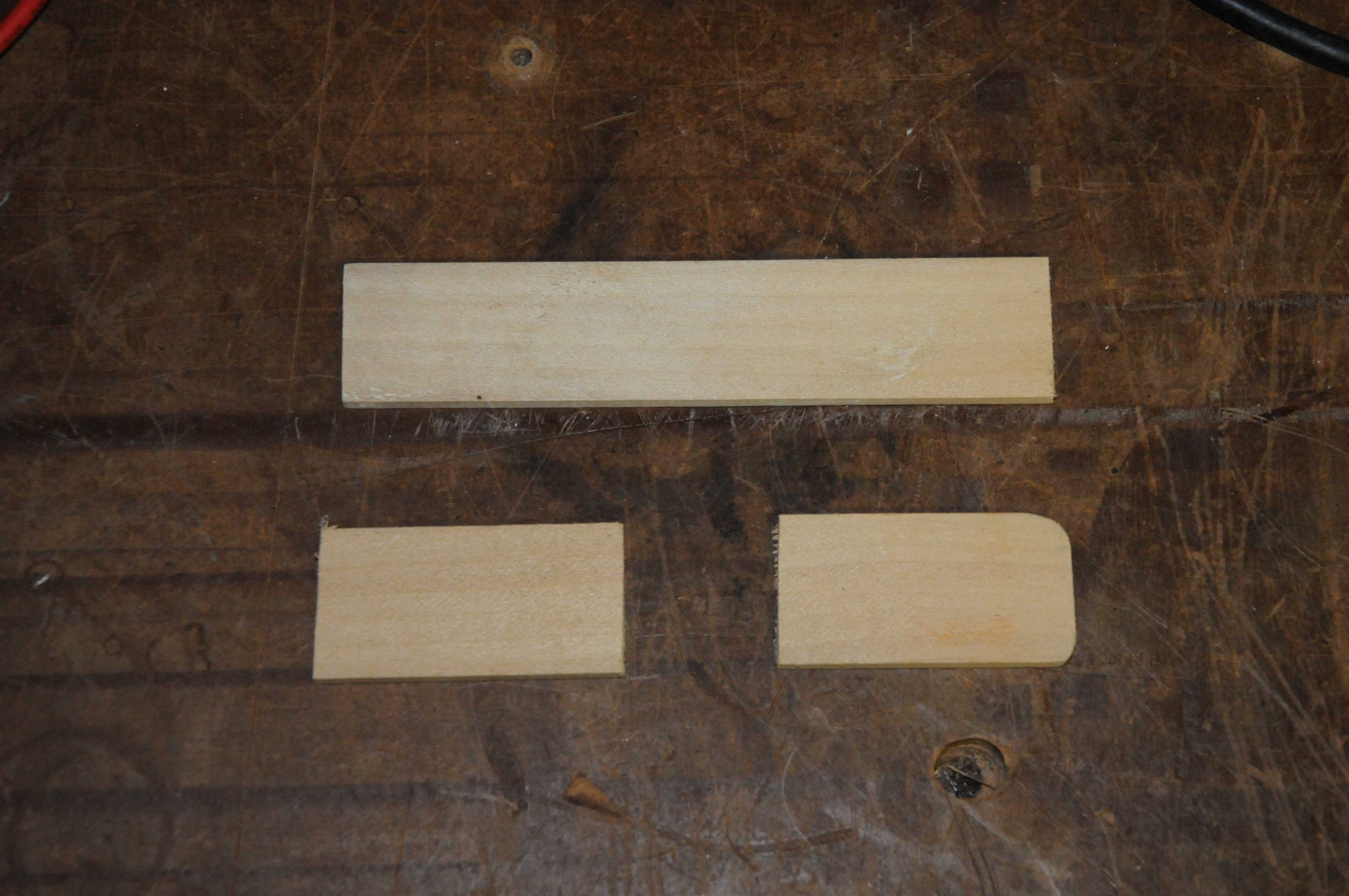
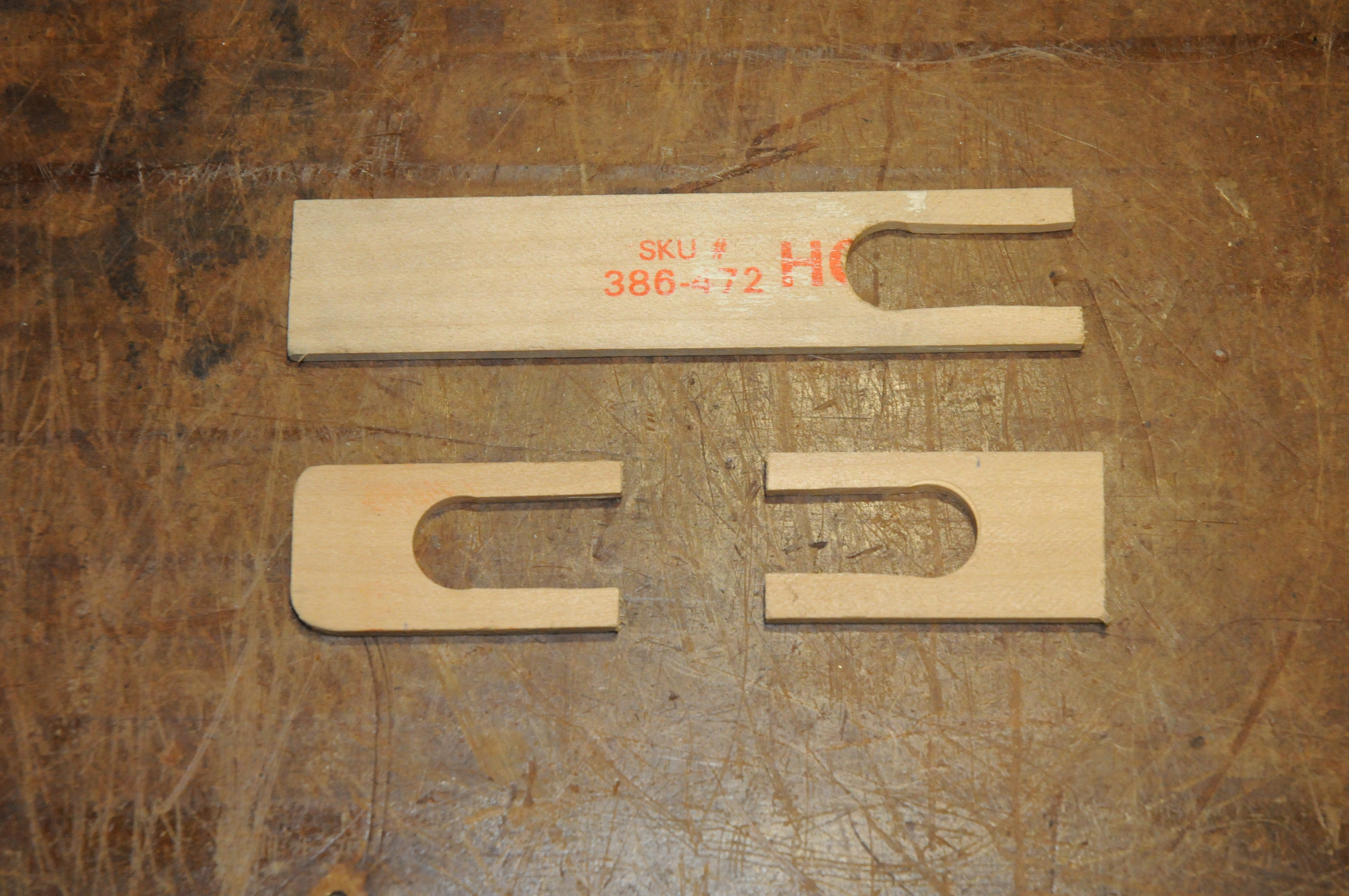
Then I drilled three ??? holes and removed the waste material to create some slots. These slots allowed the wood pieces to be placed around the shaft couplings of the variable capacitors.
Here you can get an idea of just how dirty the variable capacitors were. Definitely not something I would want to try and use for transmitting.
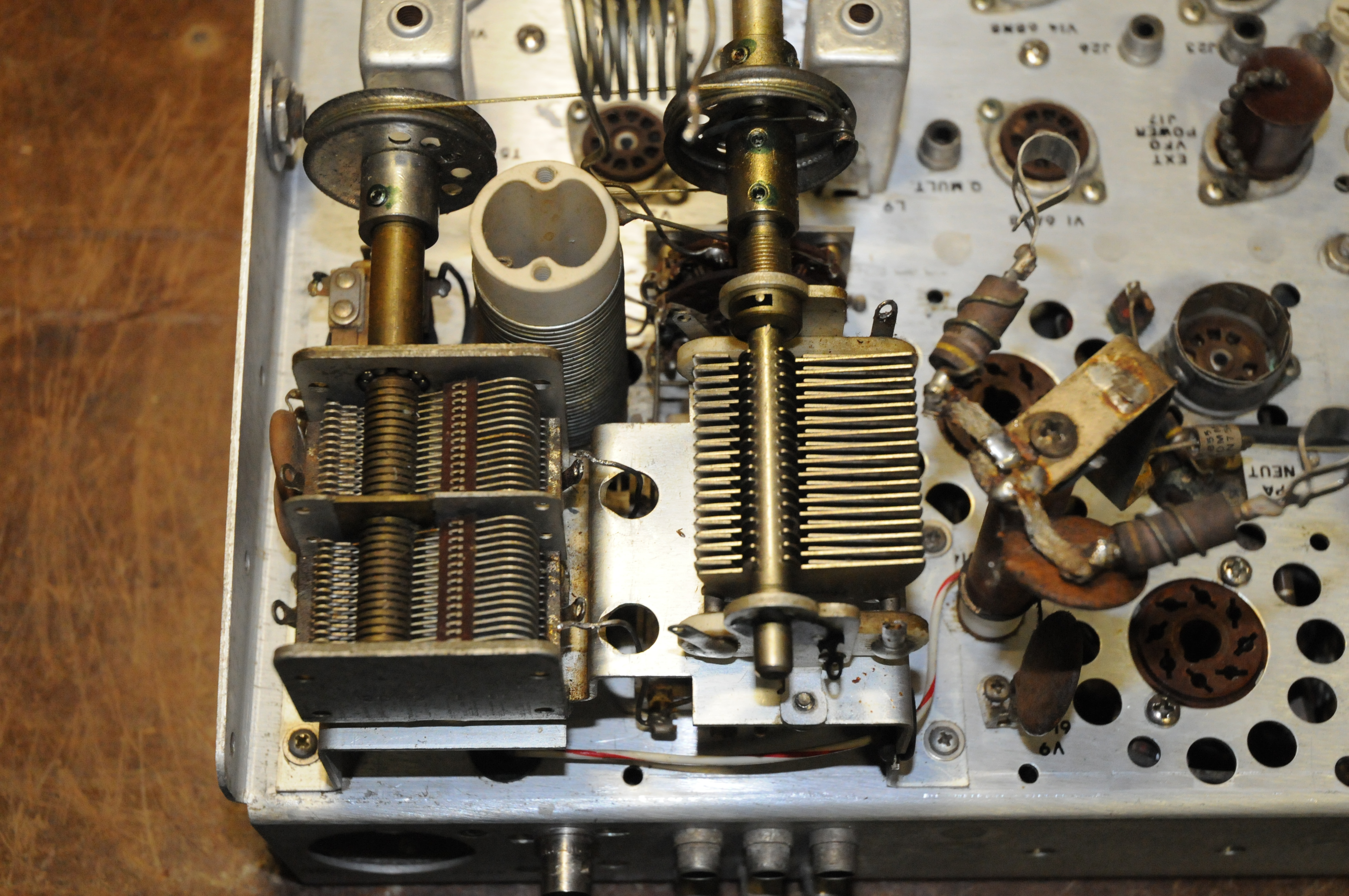
Using the long wood piece, I placed the undrilled end up against the end of the one pylley. The drilled end went around the shaft of the other variable capacitor. The two short pieces of wood were placed on the other side of each pulley to create a "sandwich", held in place with some nylon cable ties. They were now ready to be removed.
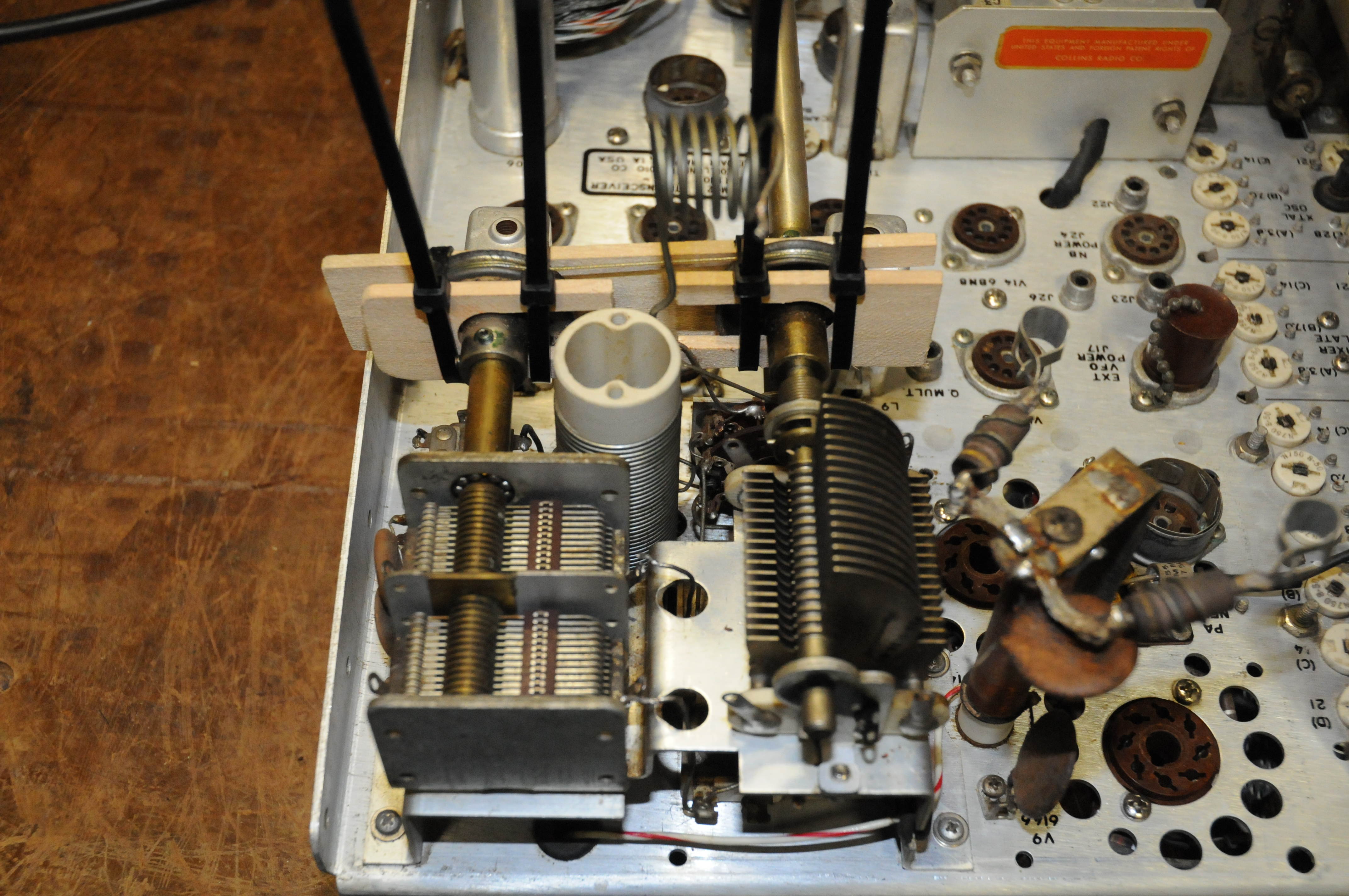
After loosening the bristol set screws, I removed the variable capacitor. Here is a picture of the pulley assembly, held intact and awaiting the cleaned capacitors.
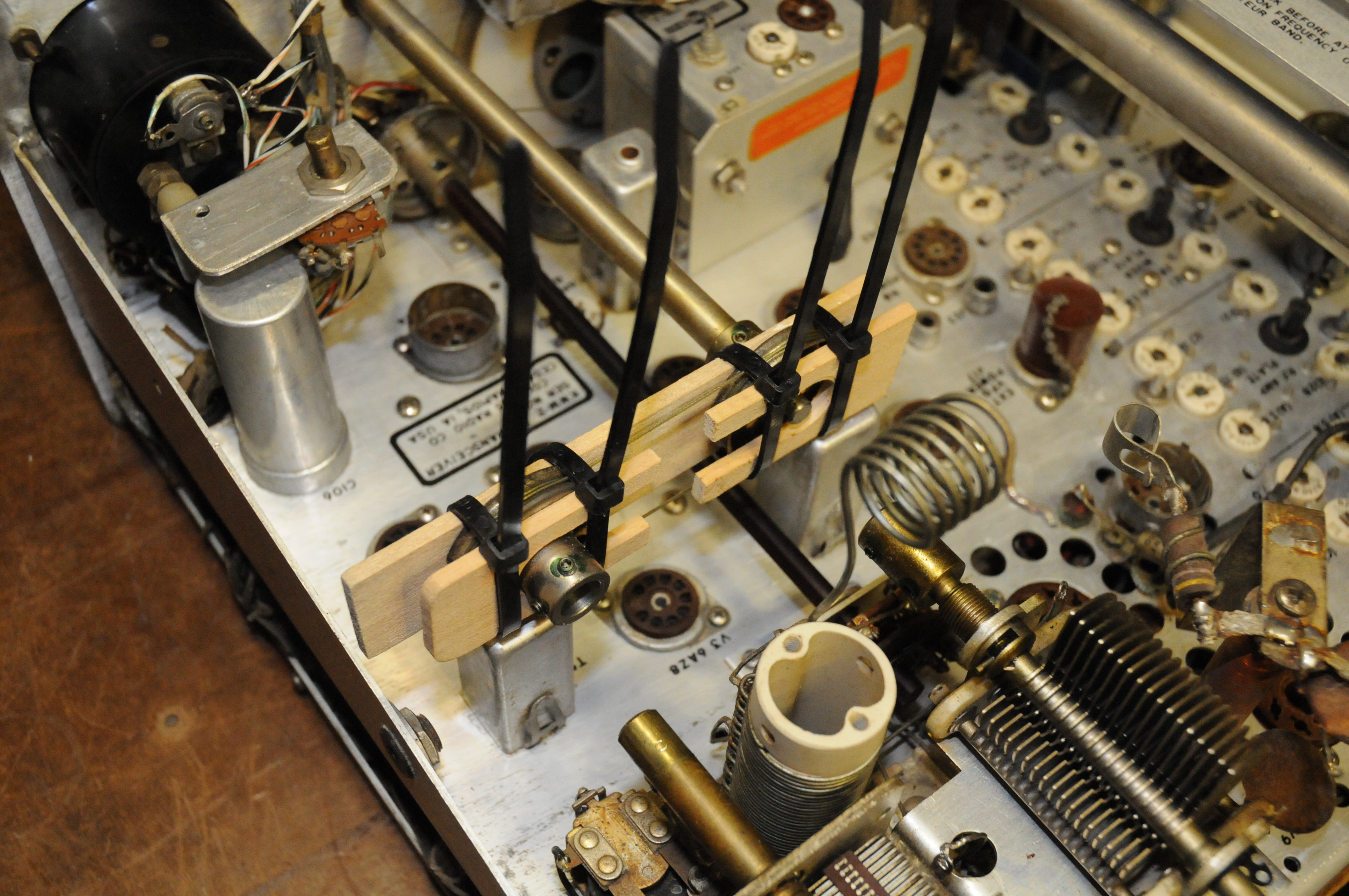
Here is a picture of the variable capacitors out of the chassis ready for cleaning.
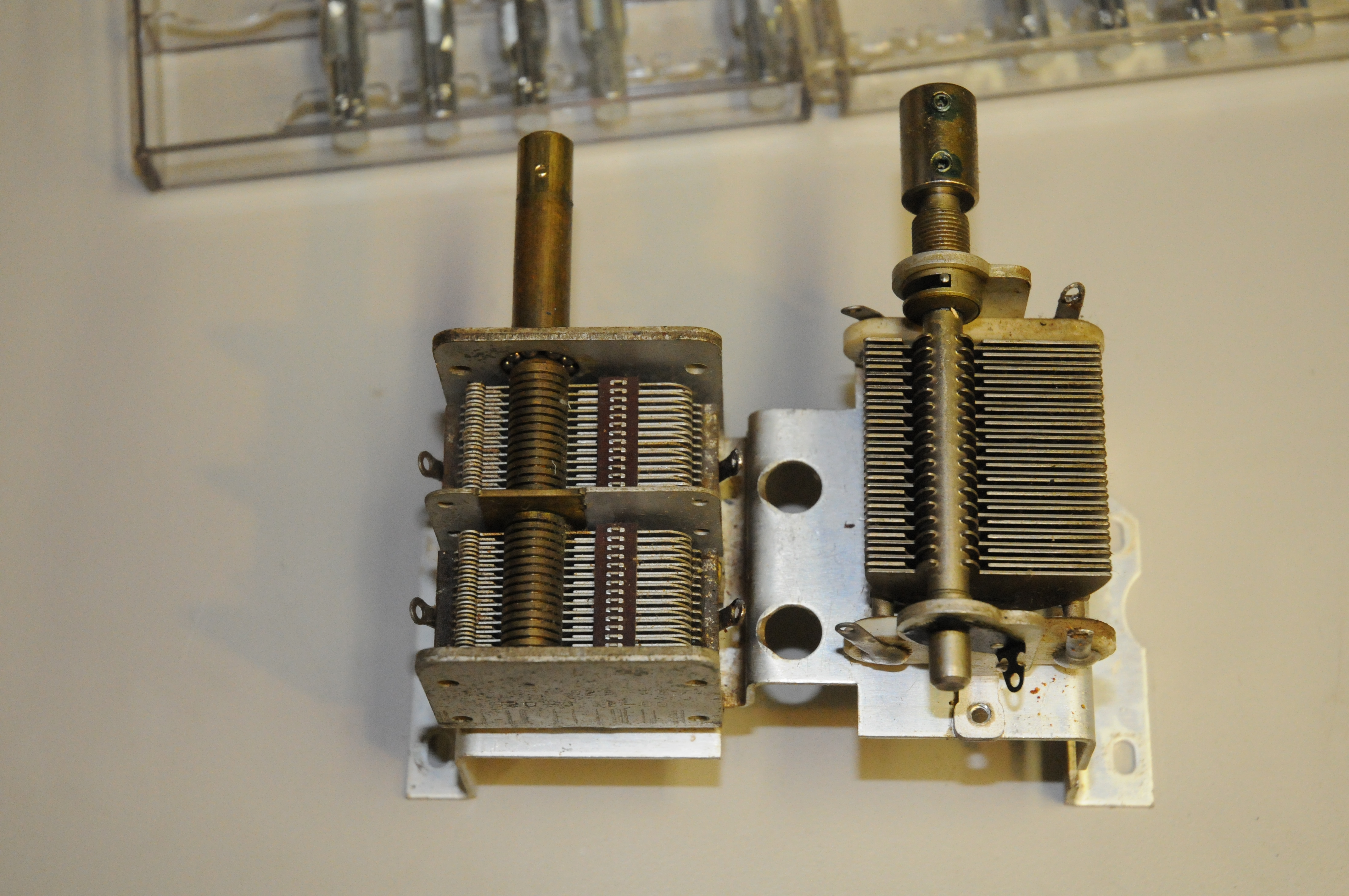
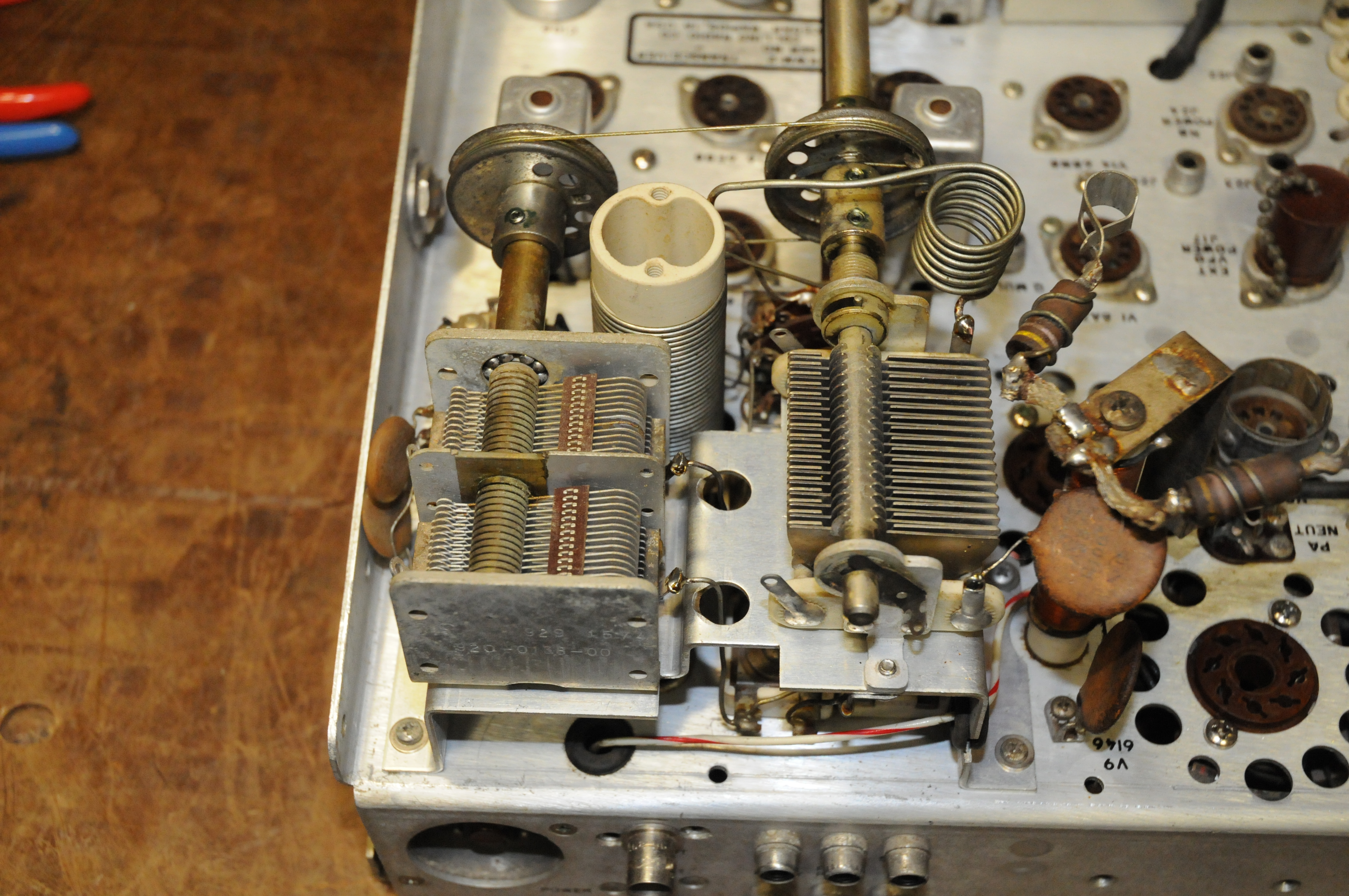
Here is a picture of the cleaned variable capacitors back in place after a thorough cleaning. I cleaned them using "brake cleaner" from an auto parts store, followed by drying using my air comressor.
Be careful if you use brake cleaner. It generally uses potent solvents and may be very flammable.
Here is a final picture of the cleaned chassis, ready for further testing before applying power.

As tempting as it was to just apply power to see what would happen, I did manage to restrain myself. I decided I would do a resistance check of all the vacuum tubes to see how my readings compared with the values in the Collins KWM-2 manual. I should point out here, having a set (7-pin and 9-pin miniature and octal "socket extenders" was a real help to making these measurements. No need to poke arounf under the chassis.
After taking measurements of all 18 tubes, and comparing them with the manual, I found most of them to be within about 10% of the manual values. Not bad for being uver 50 years old. The values out of range were all higher. But the big thing was there dod not appear to be any short circuits to worry about.
After hooking up the PM-2 power supply, I turned on the power. I used a variable transformer to make sure the appropriate line voltage was present.
While the KWM-2 was warming up, I exercised the various switches and other controls, as most had not yet been cleaned. I did not have that much restraint. In the process, I discovered two tubes (V11 and V15) which appeared to be very microphonic. I'll be substituting some tubes from my replacement stock to see if I can reduce or eliminate the microphonics.
After about 10 minutes of ward up, I did not see or smell anything wrong. I was hery happy about that. So the next test was to see if the receiver section worked. I figured I would use the calivrator, so I could test the calibrator as well as the band oscillator at the same time. (I probably should have tested the calibrator to make sure it was working, but I did not.)
Aside from noise from the dirty bandswitch contacts, I was able to hear the calibrator on all of the bands. Although I did determine the EXCITER TUNING control was way off. So it will definitely need an alignment. I also determined the speaker in the PM-2 was probably dying, so it will need to be replaced.
This will allow easier trouble shooting and alignment of the KWM-2.